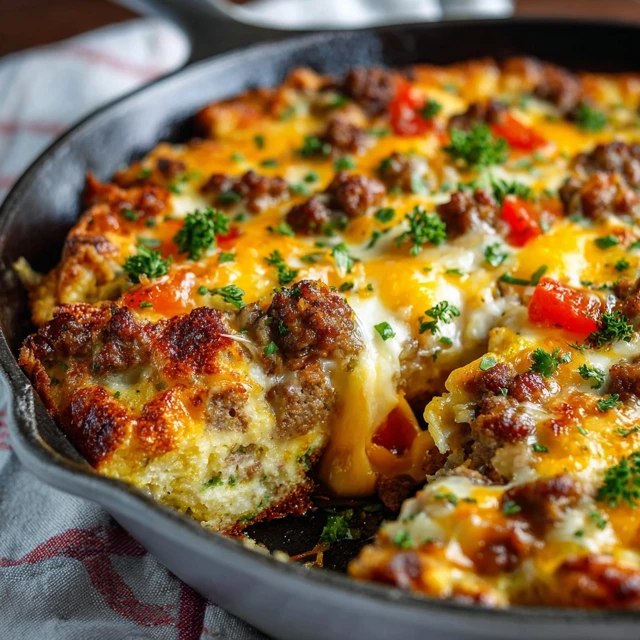
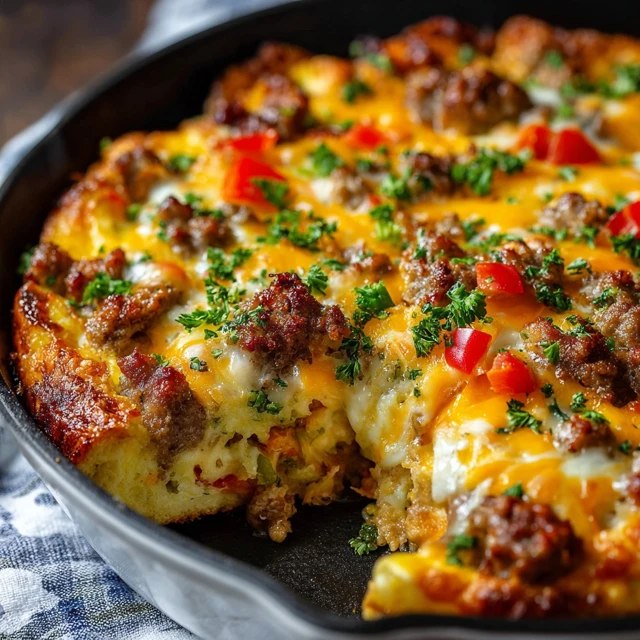
This is the casserole I assemble every Christmas Eve so that on Christmas morning I just press a button and brunch happens. Sausage breakfast casserole is the make-ahead bake with cubed bread, crumbled breakfast sausage, sharp cheddar cheese, all soaked overnight in a rich custard of eggs, milk, and seasoning. Refrigerate Sunday, bake Monday, feed eight happy people in 60 minutes from oven to table.
Fun fact: the savory bread-and-egg “strata” originated in 1930s American magazines as a way to use stale bread before refrigeration extended bread shelf-life. The word “strata” simply means “layers” in Latin. Adding breakfast sausage turned the strata into the iconic Christmas-morning casserole popularized by Southern Living magazine in the 1970s, when overnight refrigeration became standard in home kitchens.
Why this recipe works
Rest overnight, not just an hour. The bread needs 8+ hours to fully absorb the custard. Short soaks leave dry pockets and wet pockets — full overnight gives perfect even custard.
Use day-old bread, not fresh. Fresh bread turns to mush. Slightly stale bread soaks up the custard while keeping structure — toast cubes 10 min at 300°F if your bread is too fresh.
Drain the sausage well. Excess sausage grease pools at the bottom and makes the casserole greasy. Brown, then drain on paper towels for 5 minutes before layering.
Ingredients
Serves 8 (9×13 baking dish).
For the bread base
10 cups cubed day-old bread (French, sourdough, or sturdy white) — about 1 large loaf
Spicy version: Use hot Italian sausage + pepper jack instead of cheddar
Instructions
Step 1: Brown the sausage (night before)
In a large skillet over medium heat, brown the sausage and onion 8-10 minutes, breaking it into small crumbles. Drain on paper towels and let cool slightly.
Step 2: Layer the casserole
Butter a 9×13 baking dish. Spread half the bread cubes in an even layer. Top with all the sausage. Sprinkle 2 cups of cheddar over sausage. Top with remaining bread cubes.
Step 3: Whisk the custard
In a large bowl, whisk eggs vigorously until uniform. Whisk in milk, salt, pepper, Dijon, dry mustard, nutmeg, and hot sauce until fully combined.
Step 4: Pour and rest
Pour custard slowly and evenly over the bread layers. Press gently to submerge all bread. Cover with plastic wrap and refrigerate 8 hours or overnight.
Step 5: Bake covered, then uncovered
Remove from fridge 30 min before baking. Heat oven to 350°F. Bake covered with foil for 30 minutes. Remove foil, top with remaining 1 cup cheddar and parmesan, and bake uncovered 25-30 more minutes until puffed, golden brown, and set in the center (no jiggle when shaken).
Step 6: Rest and serve
Let rest 10 minutes — the casserole sets and slices cleaner. Top with fresh chives and serve with fruit, breakfast potatoes, or coffee cake.
Nutrition information
Calories: 480 kcal per serving
Protein: 28 g
Carbohydrates: 24 g
Fat: 30 g
Calcium: 32% DV
Iron: 10% DV
Pro tips for the perfect brunch casserole
Bring to room temp first. A cold casserole going into a hot oven cracks and cooks unevenly. 30 min on the counter first.
Add fresh herbs at the end. Chives, parsley, or dill added after baking keep their bright color and flavor — adding before baking turns them brown.
Test with a knife. Insert a knife in center — comes out clean = done. Wet = bake 5 more minutes.
Double the recipe for big crowds. Two 9×13 dishes feed 16. Stagger oven placement so neither blocks heat circulation.
Frequently asked questions
Can I bake it the same day?
Yes — but rest at least 1 hour (2 is better) so bread can absorb custard. Bread cubes that haven’t soaked stay dry and chewy in finished casserole.
What bread works best?
Sturdy French bread, sourdough, ciabatta, or country white. Avoid soft sandwich bread (turns to paste), super-crusty rustic (won’t soak), or sweet breads (clash with savory sausage).
How long do leftovers keep?
Refrigerator 4 days. Reheat individual portions in microwave 90 seconds or in 350°F oven 15 minutes. Texture stays great — the custard reheats beautifully unlike scrambled eggs.
Can I freeze it?
Freeze unbaked or baked. Unbaked: assemble in foil pan, wrap tightly, freeze 2 months; thaw overnight in fridge before baking. Baked: portion into containers, freeze 3 months.
Why did mine come out watery?
Either sausage wasn’t drained enough, bread was too fresh, or baked at too low a temp. Drain sausage on paper towels, use day-old bread, and confirm oven is fully preheated to 350°F.
What sides go best?
Fresh fruit salad, mimosas, breakfast potatoes, cinnamon rolls, or a simple arugula salad with lemon vinaigrette to cut the richness. Classic brunch buffet vibes.